Getting dressed
ADHD outfit planning: reduce decisions without over-organizing your closet
A low-maintenance system that turns a few successful looks into visible choices for rushed mornings and variable energy.
Published August 11, 2026 · 6 minute read
Short answer
Prepare one complete outfit at the point of use, keep a small visual shortlist of proven alternatives, and define a default. The system should require less attention than the problem it solves.
A process you can repeat
Start with the real conditions and use your own experience as evidence. The goal is not to obey a style rule; it is to make a decision you can reuse.
- 1
Choose a default
Build one weather-appropriate formula that covers ordinary days and can tolerate small swaps.
- 2
Make it visible
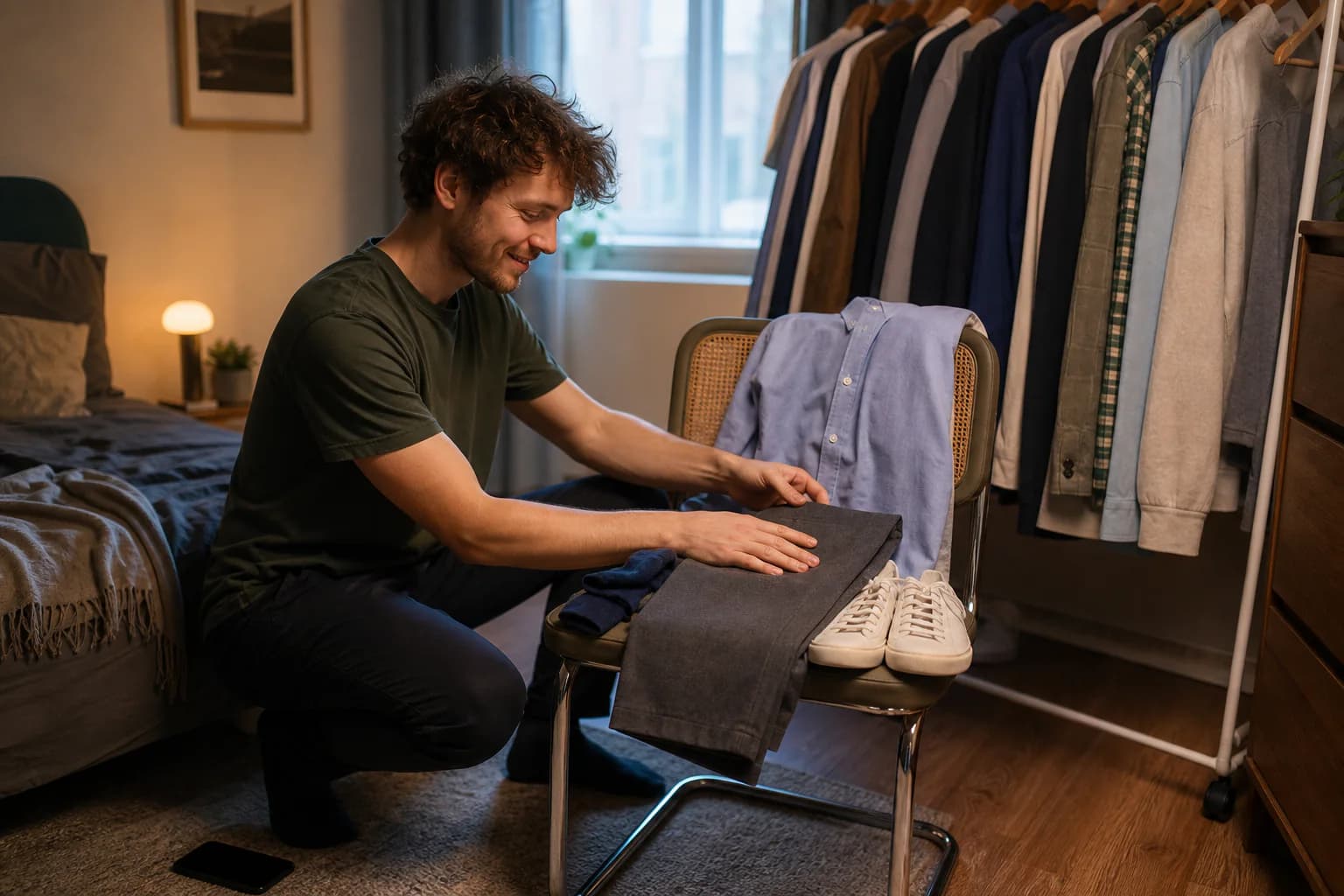
Place the complete next outfit together, including shoes, underlayers, and anything easy to forget.
- 3
Keep two backups
Save photos of a comfort option and a more polished option so a changed day does not reopen the whole closet.
- 4
Attach the reset
Prepare after laundry, after checking tomorrow's weather, or when taking off today's outfit—whichever cue actually occurs.
Adapt it to your life
ADHD strategies are personal and wardrobe systems are not medical treatment. Sensory needs, uniforms, medication effects, depression, caregiving, and changing schedules can all shape what is realistic. Design for low-energy days first.
- One visible complete choice beats a perfectly categorized closet.
- Defaults protect energy without removing self-expression.
- Reset at the easiest reliable moment, not an idealized Sunday routine.
Save the answer, not just the look
Take a quick photo when the outfit works and add one note about context: weather, occasion, comfort, and any adjustment. That personal evidence answers the next decision better than another generic recommendation.
Frequently asked questions
Should I plan a whole week at once?
Only if it helps. One next outfit plus two backups often creates more benefit with less maintenance.
What if the weather or plan changes?
Keep one compatible layer and one alternative shoe near the prepared outfit, then swap only the affected part.
Do closet apps help with ADHD?
They can reduce visual search if capture is easy and the shortlist stays small. They add friction if maintaining the catalogue becomes another unfinished project.