Personal style
How to explore gender expression with clothes you already own
Use silhouette, proportion, styling, and context experiments before assuming self-discovery requires a new wardrobe.
Published August 22, 2026 · 6 minute read
Short answer
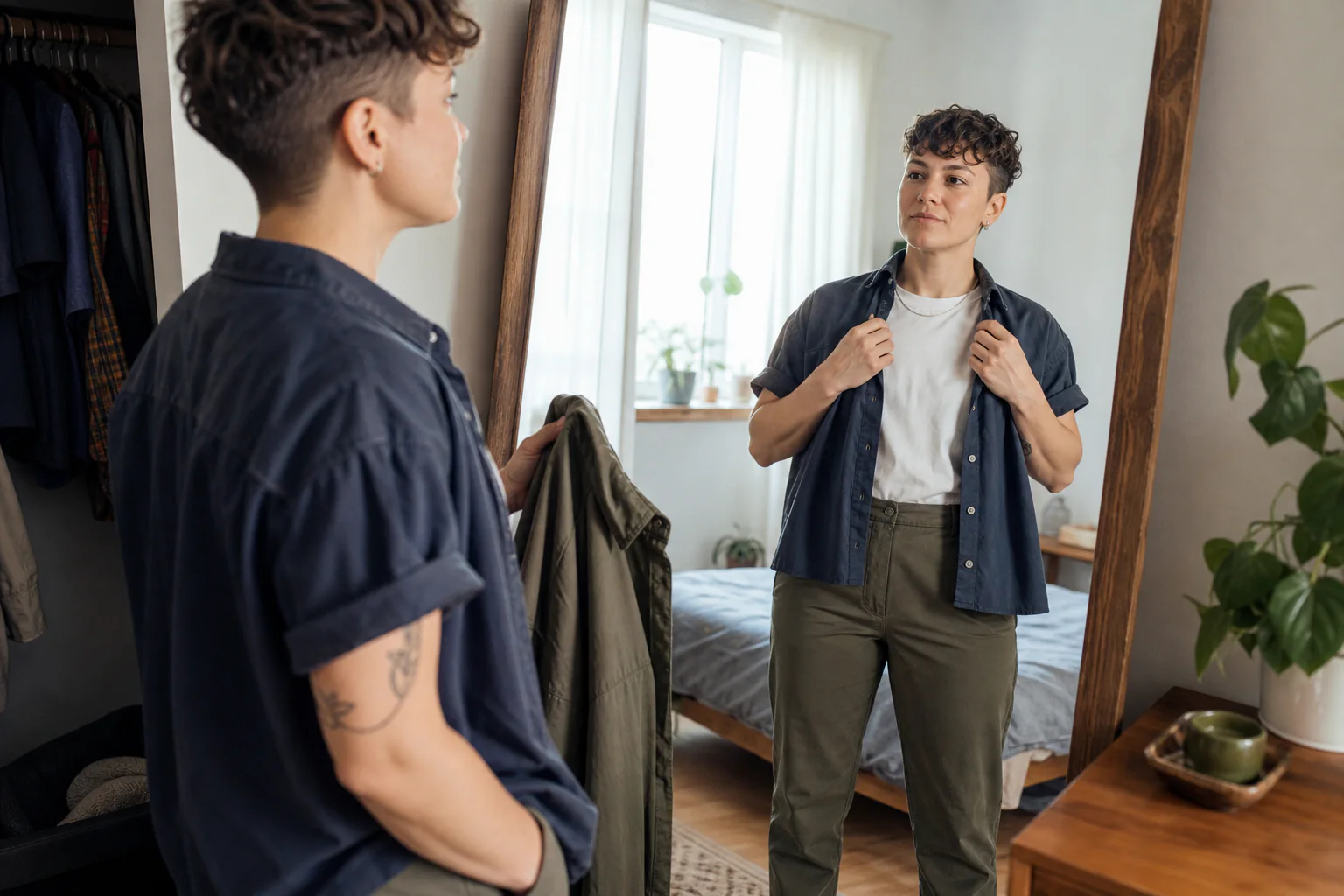
Choose one feeling or presentation goal, restyle familiar garments around silhouette and emphasis, and document what creates ease or recognition. Borrowing and low-stakes tests can guide later purchases.
A process you can repeat
Start with the real conditions and use your own experience as evidence. The goal is not to obey a style rule; it is to make a decision you can reuse.
- 1
Define the conditions
Name a desired feeling rather than a body-correction goal.
- 2
Use your own evidence
Experiment with tucking, rolling, layering, waist position, shape, and accessories.
- 3
Test the result
Test privately or in a trusted setting at the level of safety you choose.
- 4
Save what you learned
Save what felt affirming and buy only for a repeated missing function.
Adapt it to your life
Gender expression is personal and can be fluid. Safety, dysphoria, family, work, binders, tucking, mobility, and medical needs matter; seek qualified guidance for practices that affect health.
- Name a desired feeling rather than a body-correction goal.
- Experiment with tucking, rolling, layering, waist position, shape, and accessories.
- Test privately or in a trusted setting at the level of safety you choose.
Save the answer, not just the look
Take a quick photo when the outfit works and add one note about context: weather, occasion, comfort, and any adjustment. That personal evidence answers the next decision better than another generic recommendation.
Frequently asked questions
Do I need to buy anything?
No. Start with what you own and buy only when the same function remains missing after you test alternatives.
How do I know the system works?
It should reduce a real decision, survive the full context, and be easy enough to repeat.
What if my situation changes?
Save the formula, not a rigid rule. Change the part affected by weather, body, work, safety, or identity.