Body changes
How to dress kindly after your body size or shape changes
A practical bridge wardrobe for weight change, illness, hormones, disability, recovery, or any season when familiar clothes fit differently.
Published August 8, 2026 · 6 minute read
Short answer
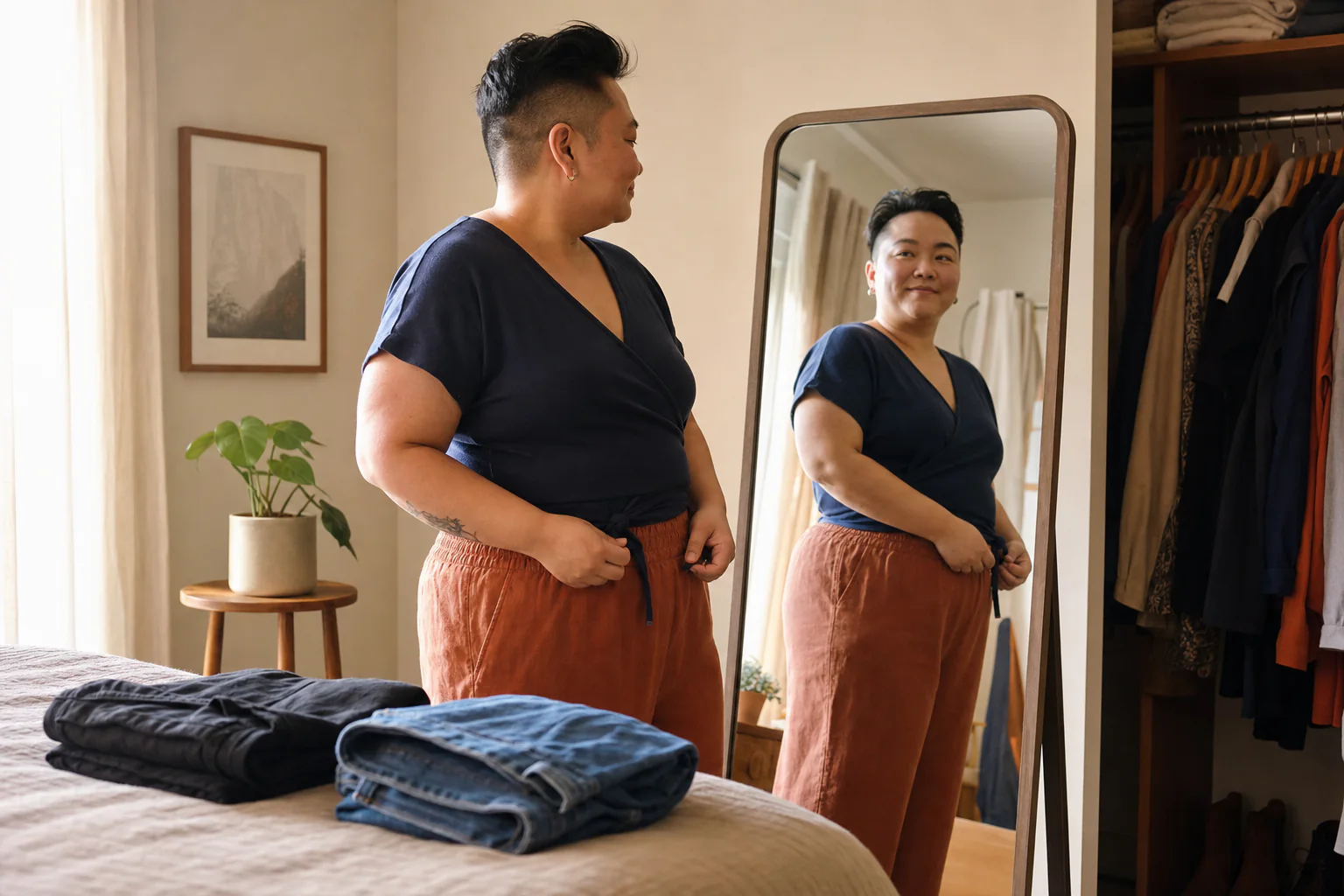
Dress the body you have today. Put painful or judgment-triggering clothes out of immediate view, identify a small comfort-and-context capsule, and delay large purchases until your needs are clearer.
A process you can repeat
Start with the real conditions and use your own experience as evidence. The goal is not to obey a style rule; it is to make a decision you can reuse.
- 1
Remove daily friction
Move anything that pinches, falls, restricts, or starts a harmful internal argument.
- 2
Find today's anchors
Choose a few bottoms, tops, layers, and undergarments that feel physically safe now.
- 3
Build for current contexts
Cover the next two weeks of work, care, movement, weather, and one occasion—not a hypothetical future.
- 4
Review without a deadline
Revisit stored pieces when you choose. Tailoring, resale, archive, and letting go are all valid outcomes.
Adapt it to your life
Body changes can involve medical and emotional needs outside wardrobe advice. Seek appropriate clinical support for sudden or concerning changes. Style should support dignity and function; it is not treatment and does not require hiding or correcting a body.
- Fit is information about a garment, not a verdict on a body.
- A small present-tense wardrobe can reduce daily distress.
- Alter, borrow, or buy selectively when the change may continue.
Save the answer, not just the look
Take a quick photo when the outfit works and add one note about context: weather, occasion, comfort, and any adjustment. That personal evidence answers the next decision better than another generic recommendation.
Frequently asked questions
Should I keep clothes that do not fit?
Keep a bounded set if they are useful, meaningful, or likely to fit soon; store them away from daily decisions. You do not owe every size permanent space.
How much should I buy during a transition?
Buy the smallest set that covers current needs, prioritizing adjustable pieces and good underlayers. Reassess after living in them.
Can tailoring help?
Often, especially for waist, hems, straps, closures, and mobility details. Ask what can be reversed if your needs may keep changing.