Outfit photos
How to take outfit photos an AI wardrobe app can analyze accurately
Use even light, a simple background, full garment visibility, a stable camera, and separate detail shots when layers or similar pieces are hard to distinguish.
Published August 24, 2026 · 6 minute read
Short answer
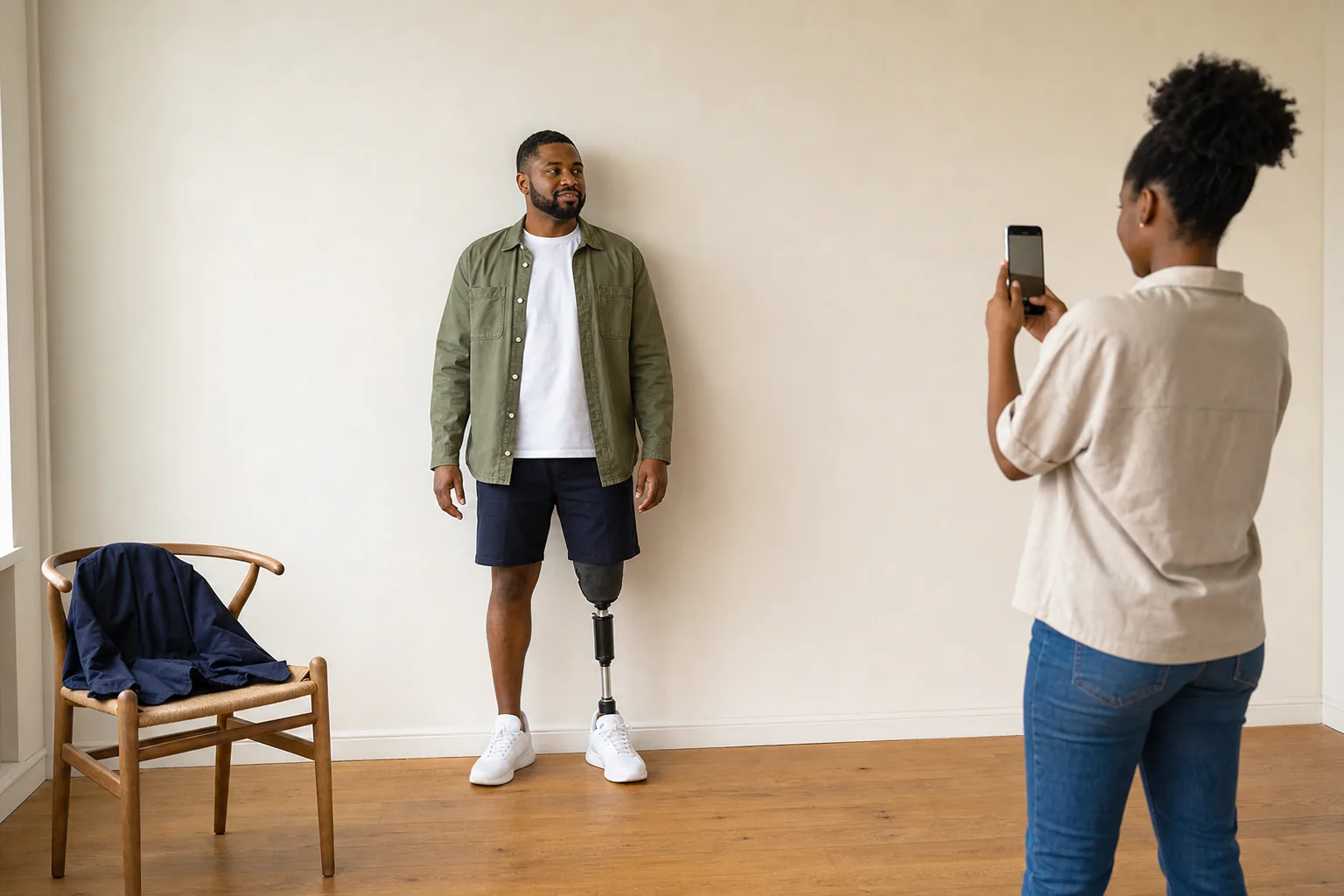
For the best first photo, show one person from head or shoulders to shoes in even front light, keep limbs from covering garments, and avoid portrait blur. Add a second angle only when it reveals useful clothing evidence.
A process you can repeat
Start with the real conditions and use your own experience as evidence. The goal is not to obey a style rule; it is to make a decision you can reuse.
- 1
Define the conditions
Face a window or diffuse light; avoid backlight and colored bulbs.
- 2
Use your own evidence
Keep the full silhouette and shoes visible with arms slightly away.
- 3
Test the result
Use a plain contrasting background and clean lens without portrait blur.
- 4
Save what you learned
Crop other people and private details; add close-ups for hidden layers or texture.
Adapt it to your life
Computer vision can still confuse layering, similar garments, reflections, loose silhouettes, mobility devices, and culturally specific clothing. Treat labels as suggestions and choose tools that let you correct them.
- Face a window or diffuse light; avoid backlight and colored bulbs.
- Keep the full silhouette and shoes visible with arms slightly away.
- Use a plain contrasting background and clean lens without portrait blur.
Save the answer, not just the look
Take a quick photo when the outfit works and add one note about context: weather, occasion, comfort, and any adjustment. That personal evidence answers the next decision better than another generic recommendation.
Frequently asked questions
Do I need to buy anything?
No. Start with what you own and buy only when the same function remains missing after you test alternatives.
How do I know the system works?
It should reduce a real decision, survive the full context, and be easy enough to repeat.
What if my situation changes?
Save the formula, not a rigid rule. Change the part affected by weather, body, work, safety, or identity.