Men's style
Men’s business casual without buying a new wardrobe
Translate a vague office dress code into a few reliable combinations using shirts, trousers, knits, jackets, and shoes you already own.
Published August 2, 2026 · 6 minute read
Short answer
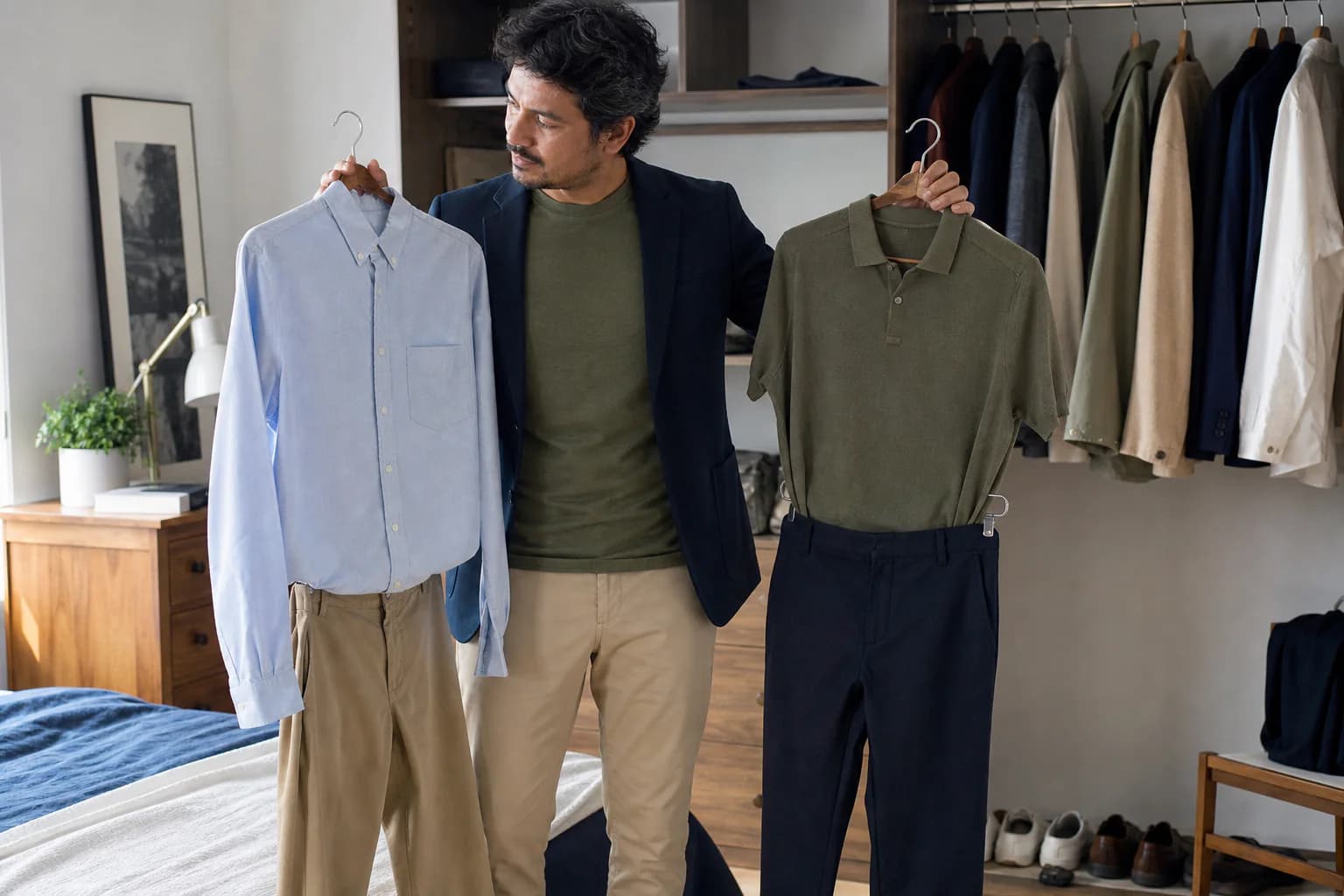
Business casual is usually a range, not a uniform. Start with clean, well-fitting everyday pieces, add one structured element, remove one overly formal element, and test the result against your actual office.
A process you can repeat
Start with the real conditions and use your own experience as evidence. The goal is not to obey a style rule; it is to make a decision you can reuse.
- 1
Find the local baseline
Look at the people doing your role, not a generic menswear chart. Note denim, sneakers, collars, jackets, and client-facing days.
- 2
Start with the clean middle
Try chinos or dark trousers, a plain shirt or knit, and clean simple shoes. Avoid both weekend wear and full interview formality.
- 3
Add one signal
A textured blazer, overshirt, belt, or polished shoe can add intention. You rarely need every formal signal at once.
- 4
Run a full-day test
Sit, commute, reach, and check temperature. An outfit that looks correct but cannot survive your day is not a useful formula.
Adapt it to your life
Creative, finance, hospitality, education, and remote offices can mean very different things by business casual. Cultural dress and gender expression do not need to disappear; the practical question is how formality, safety, and your identity can coexist.
- Fit, condition, and context matter more than owning a blazer.
- One structured element can make an ordinary outfit office-ready.
- Build two dependable formulas before deciding anything is missing.
Save the answer, not just the look
Take a quick photo when the outfit works and add one note about context: weather, occasion, comfort, and any adjustment. That personal evidence answers the next decision better than another generic recommendation.
Frequently asked questions
Are jeans business casual for men?
Sometimes. Dark, clean, non-distressed jeans are accepted in many offices and rejected in others; local evidence beats a universal answer.
Do I need a blazer?
No. A collared overshirt, fine knit, structured cardigan, or polished shoe can provide enough structure in many workplaces.
Can sneakers be business casual?
Minimal, clean sneakers often work in relaxed offices. Keep an alternative when clients, ceremonies, or safety rules call for something else.