Packing
How to pack for a climate-transition trip, from New York cold to Miami heat
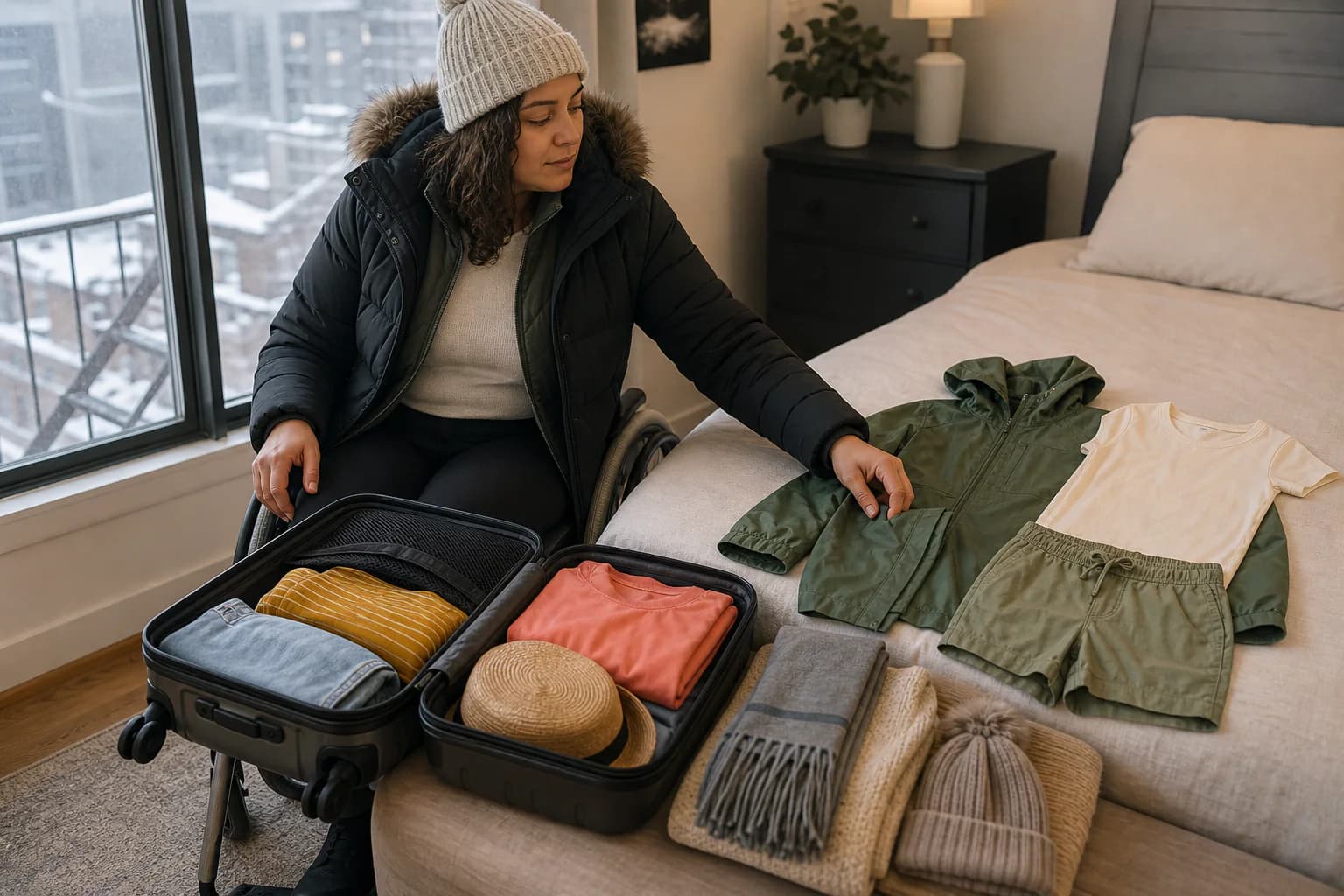
Use a travel-day bridge, destination base, and compact temperature layers instead of packing two unrelated wardrobes.
Published August 21, 2026 · 6 minute read
Short answer
Dress transit in removable layers over a destination-ready base, make the bulkiest layer serve the return, and reserve bag space for rain, cold interiors, and one genuine weather disruption.
A process you can repeat
Start with the real conditions and use your own experience as evidence. The goal is not to obey a style rule; it is to make a decision you can reuse.
- 1
Define the conditions
Compare hourly conditions at departure, arrival, and return.
- 2
Use your own evidence
Wear a breathable destination base under removable transit layers.
- 3
Test the result
Make shoes and outerwear cross at least two trip contexts.
- 4
Save what you learned
Photograph each day and one disruption backup before packing.
Adapt it to your life
People traveling with medication, mobility aids, religious clothing, infants, or limited size availability need more margin. Airline rules and forecasts change; verify them near departure.
- Compare hourly conditions at departure, arrival, and return.
- Wear a breathable destination base under removable transit layers.
- Make shoes and outerwear cross at least two trip contexts.
Save the answer, not just the look
Take a quick photo when the outfit works and add one note about context: weather, occasion, comfort, and any adjustment. That personal evidence answers the next decision better than another generic recommendation.
Frequently asked questions
Do I need to buy anything?
No. Start with what you own and buy only when the same function remains missing after you test alternatives.
How do I know the system works?
It should reduce a real decision, survive the full context, and be easy enough to repeat.
What if my situation changes?
Save the formula, not a rigid rule. Change the part affected by weather, body, work, safety, or identity.